"I can't even begin to describe how incredible our experience trekking to ABC with our guide Prakash was. We had been travelling around Asia for three months and the ABC trek was easily the highlight of the trip."
Annapurna Base Camp Trek — Compare 6 Guided Routes
Six guided routes into the Annapurna Sanctuary, from a fast five-day push to a ten-day walk over Poon Hill — compared on price, pacing, permits and what is actually included.
From
$91
per person
Free cancellation
- 5.0 / 5 161+ Reviews
- 5 days Duration
- 4,130 m Base Camp Altitude
- Licensed Guide ACAP Permits Included
- Free Cancellation
The Experience
Why Trek to Annapurna Base Camp
The Sanctuary is the only place in the Himalaya where you sleep encircled by 7,000 m and 8,000 m peaks after a week of walking.
Highlights
- Stand at Annapurna Base Camp (4,130 m) inside the Annapurna Sanctuary amphitheatre
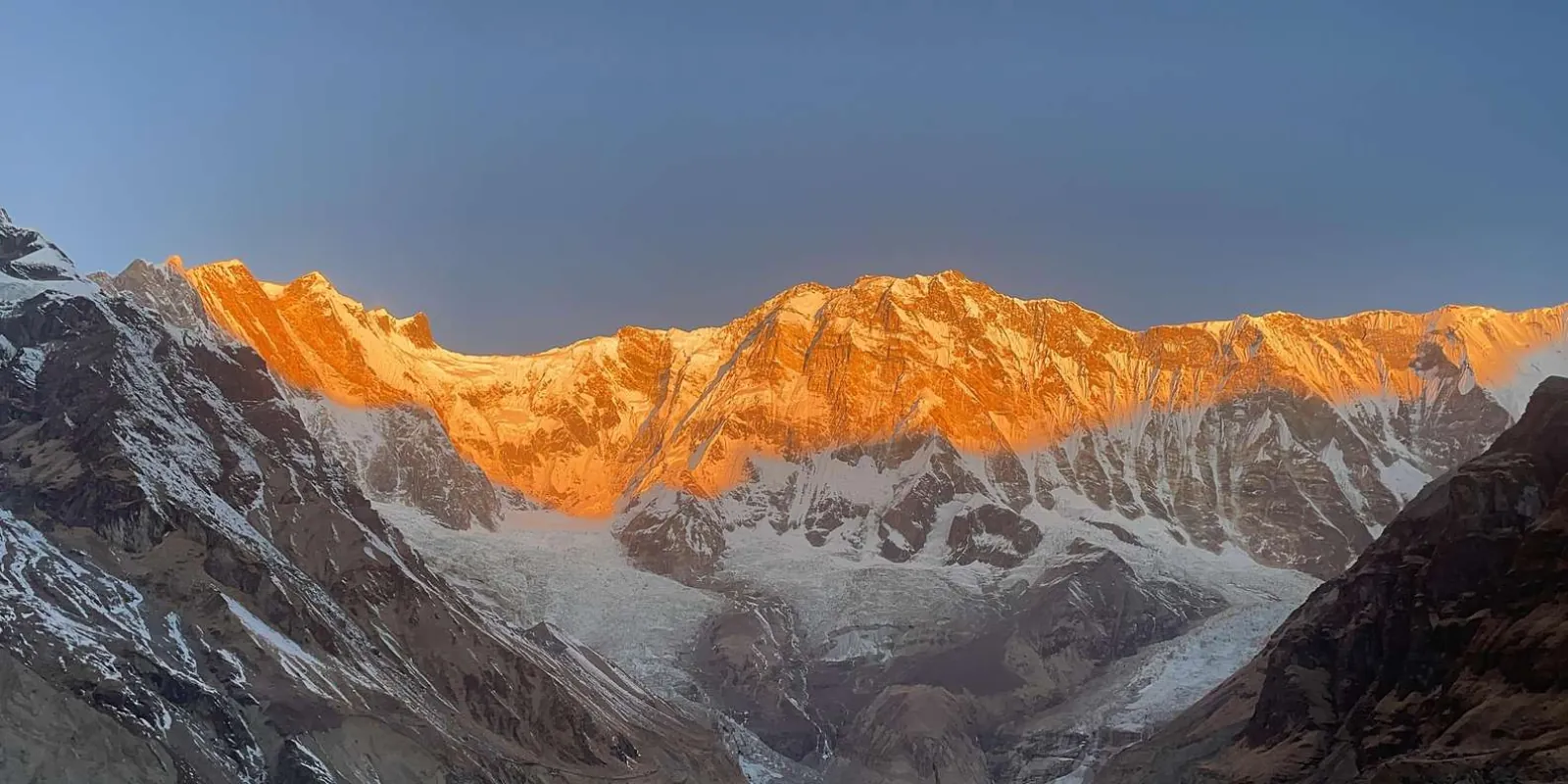
- Sleep at base camp rather than turning around — sunrise on Annapurna I and Machhapuchhre
- Jeep transfer to Simrung cuts roughly two days off the classic Nayapul approach
- Soak in the natural hot springs at Jhinu Danda on the descent
- Walk through Gurung villages, terraced farmland, bamboo forest and glacial moraine in five days
What's Included
- Licensed, experienced English-speaking trekking guide
- All Annapurna Conservation Area permits and paperwork
- 4 nights in mountain guest houses along the route
- Shared jeep transfer Pokhara–Simrung–Pokhara
- Hotel pickup and drop-off in Pokhara
- Loan of a down jacket, sleeping bag and trekking poles
- Water purification tablets and a first-aid kit
- Luggage storage in Kathmandu and Pokhara
- Kathmandu–Pokhara flights and full-board meals on the all-inclusive option
- Porter support on the all-inclusive option
How It Works
Four steps from choosing a route to standing at base camp.
Pick Your Route Length
Five days if your schedule is tight, seven for the classic pacing, nine or ten to add the Poon Hill sunrise. Every option on this site reaches the same base camp at 4,130 m.
Book Through GetYourGuide
Reserve your place with free cancellation and, on most operators, reserve-now-pay-later. Permits and paperwork are handled by the operator before you arrive.
Meet Your Guide in Pokhara
Most treks start with a hotel pickup in Pokhara and a jeep to the road head. Licensed guides carry the first-aid kit and manage the pace on the climb.
Walk Into the Sanctuary
Gurung villages, rhododendron forest and the Modi Khola gorge give way to the glacial floor of the Annapurna Sanctuary — and a night beneath Annapurna I.
Photo Gallery
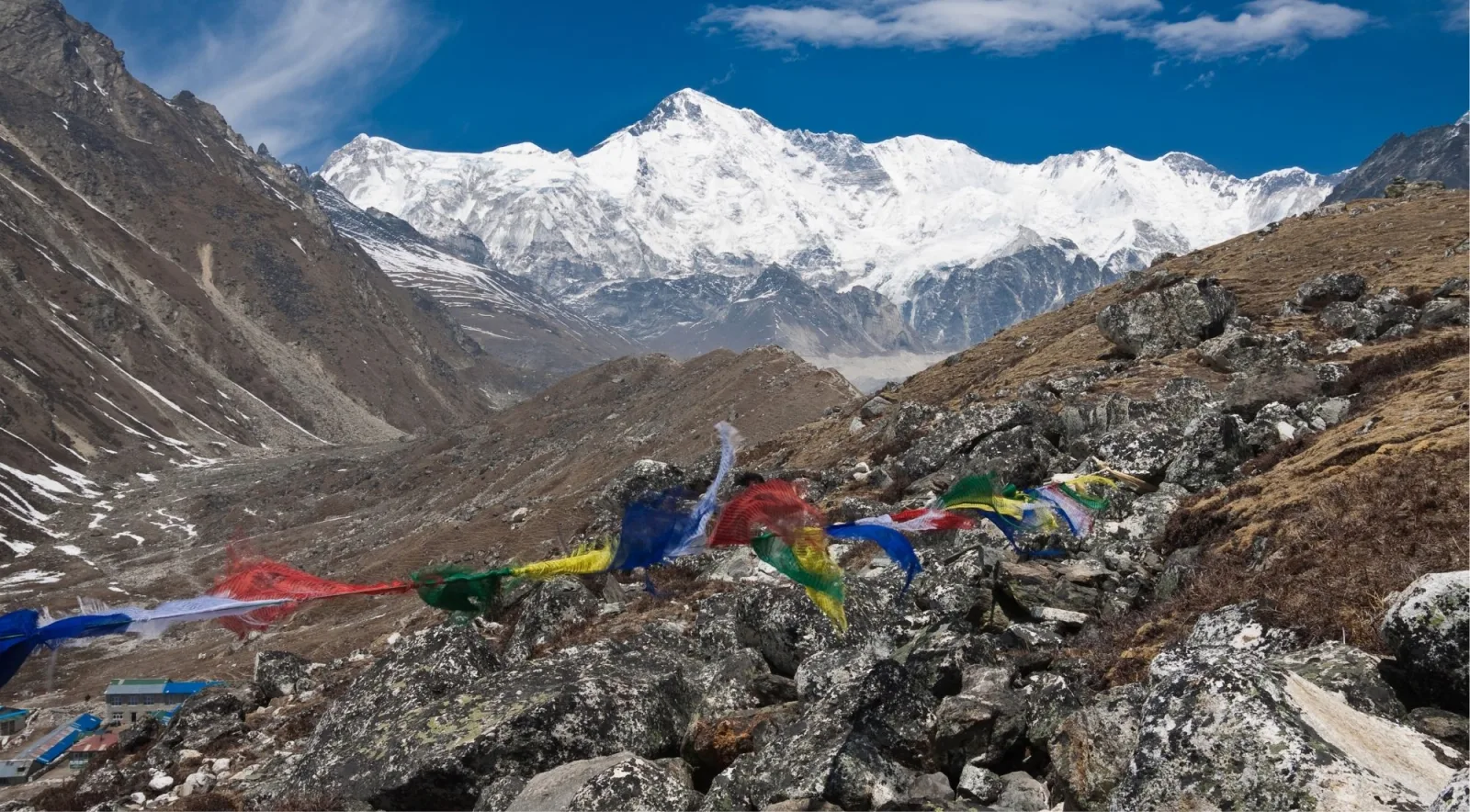
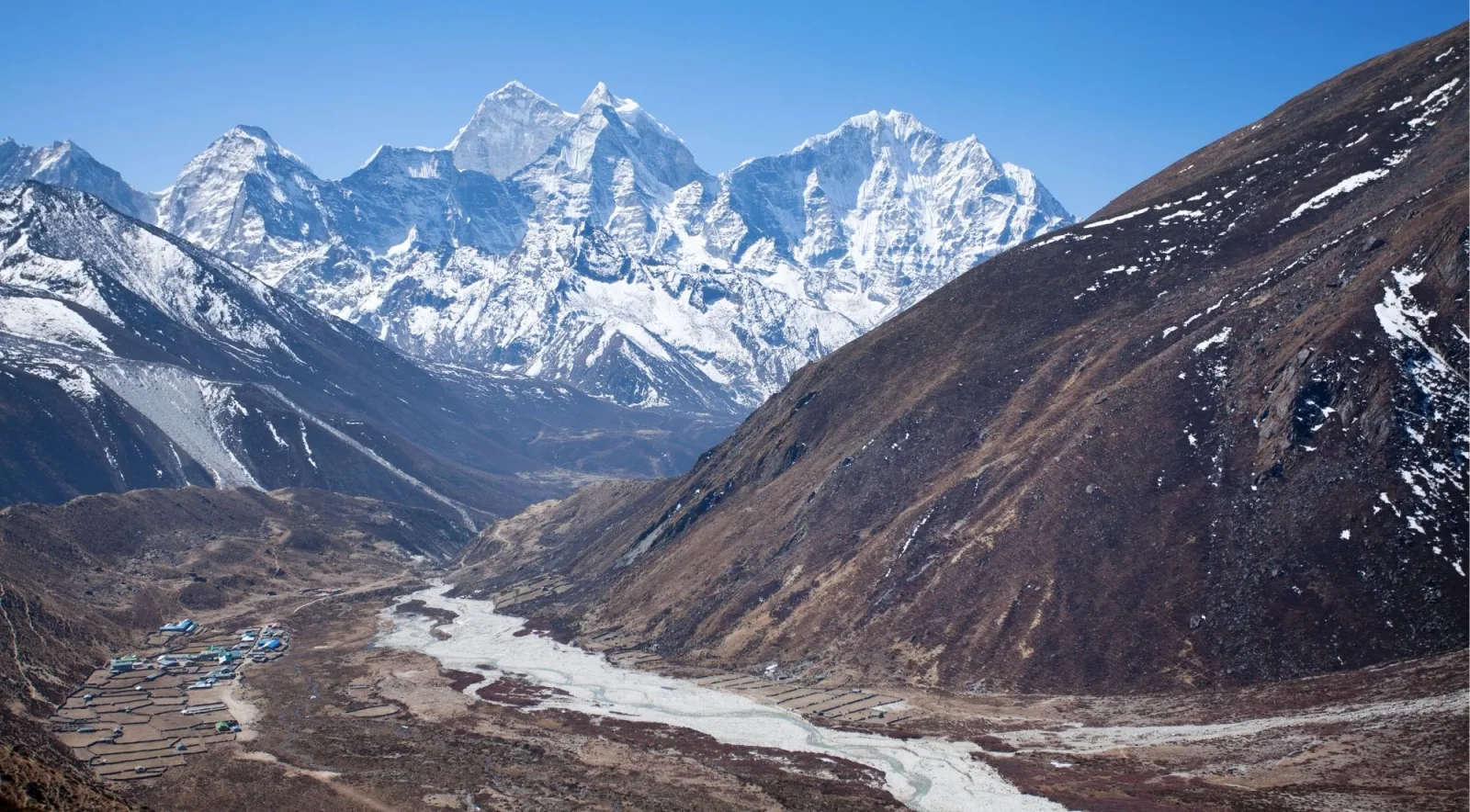
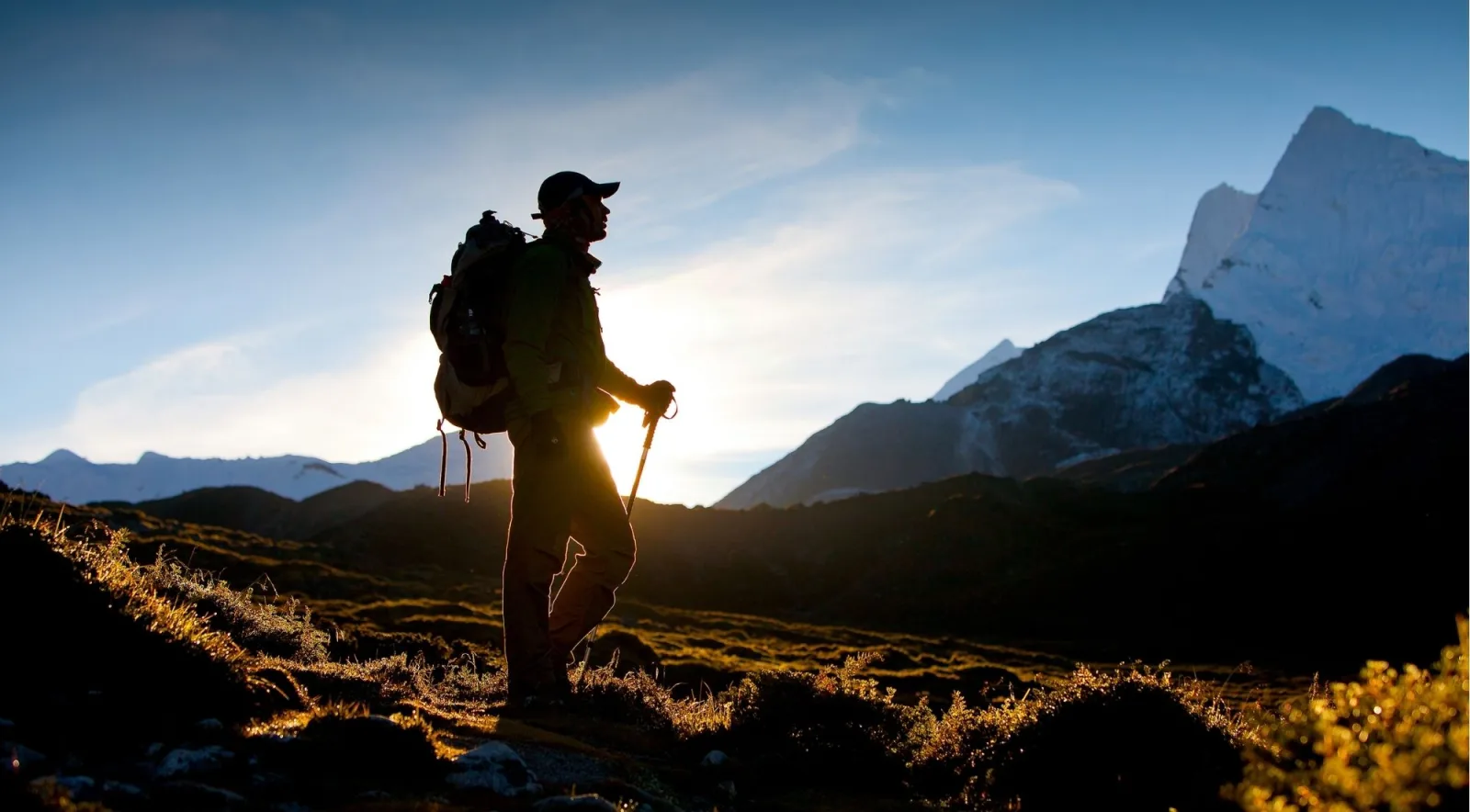
The Annapurna Sanctuary
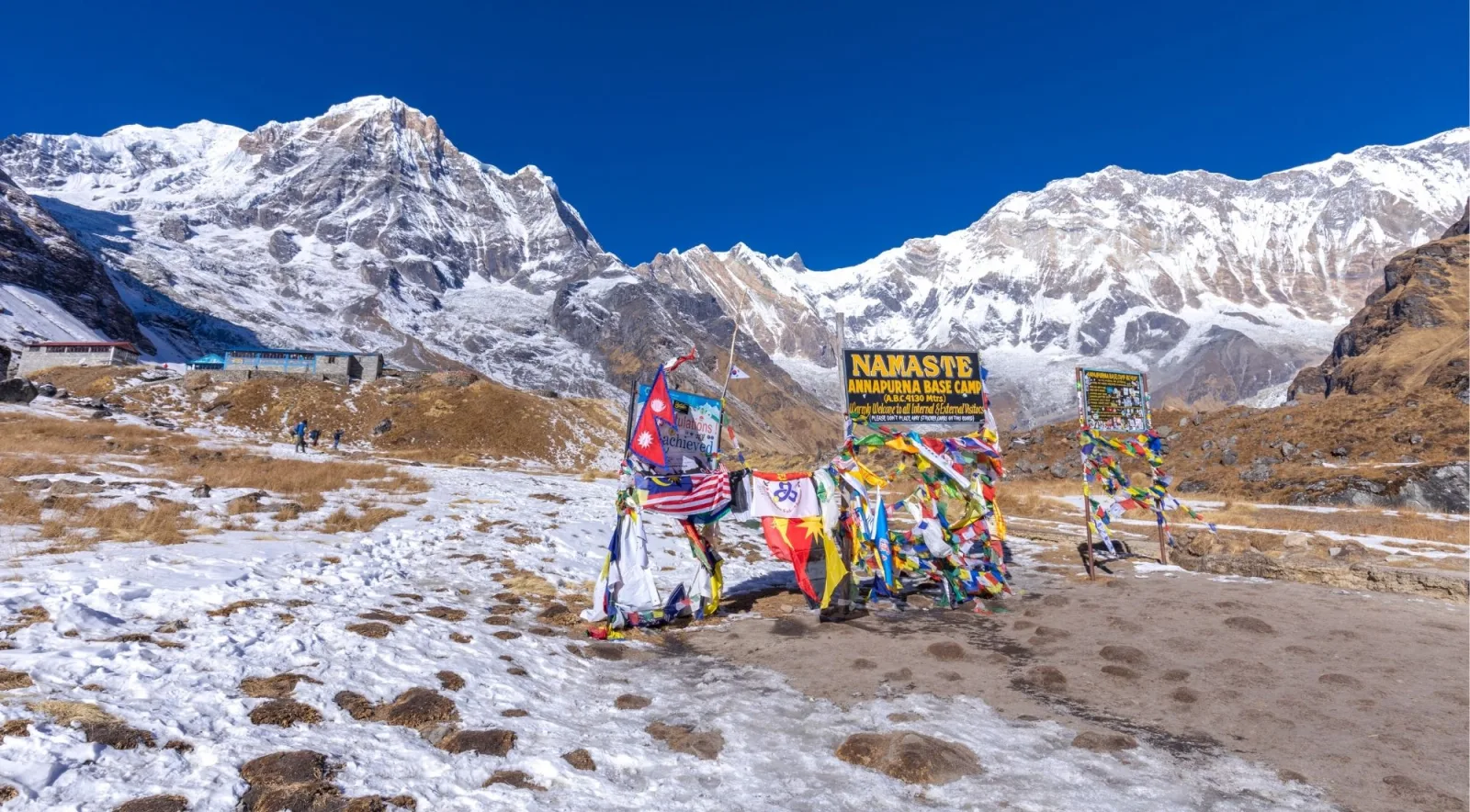
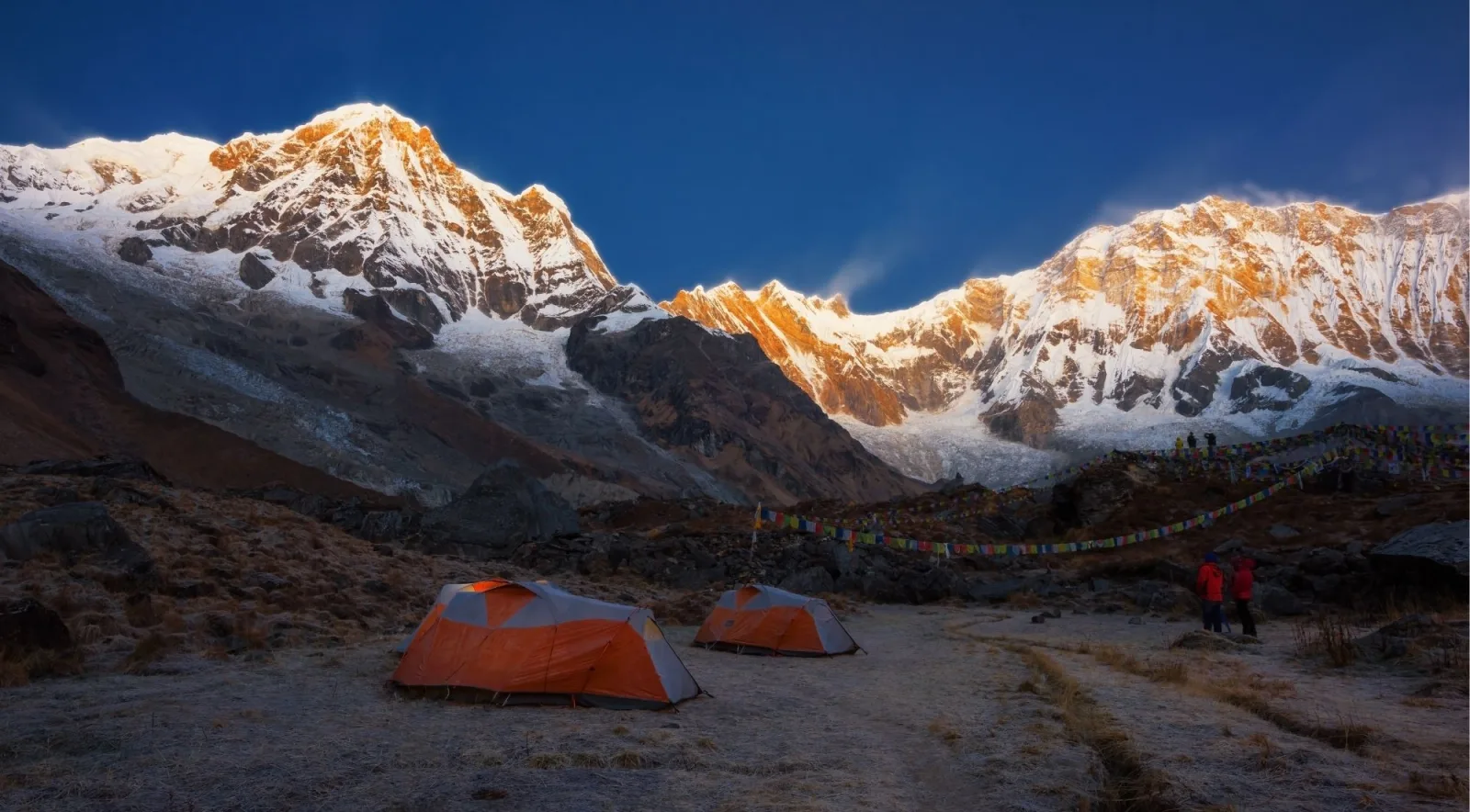
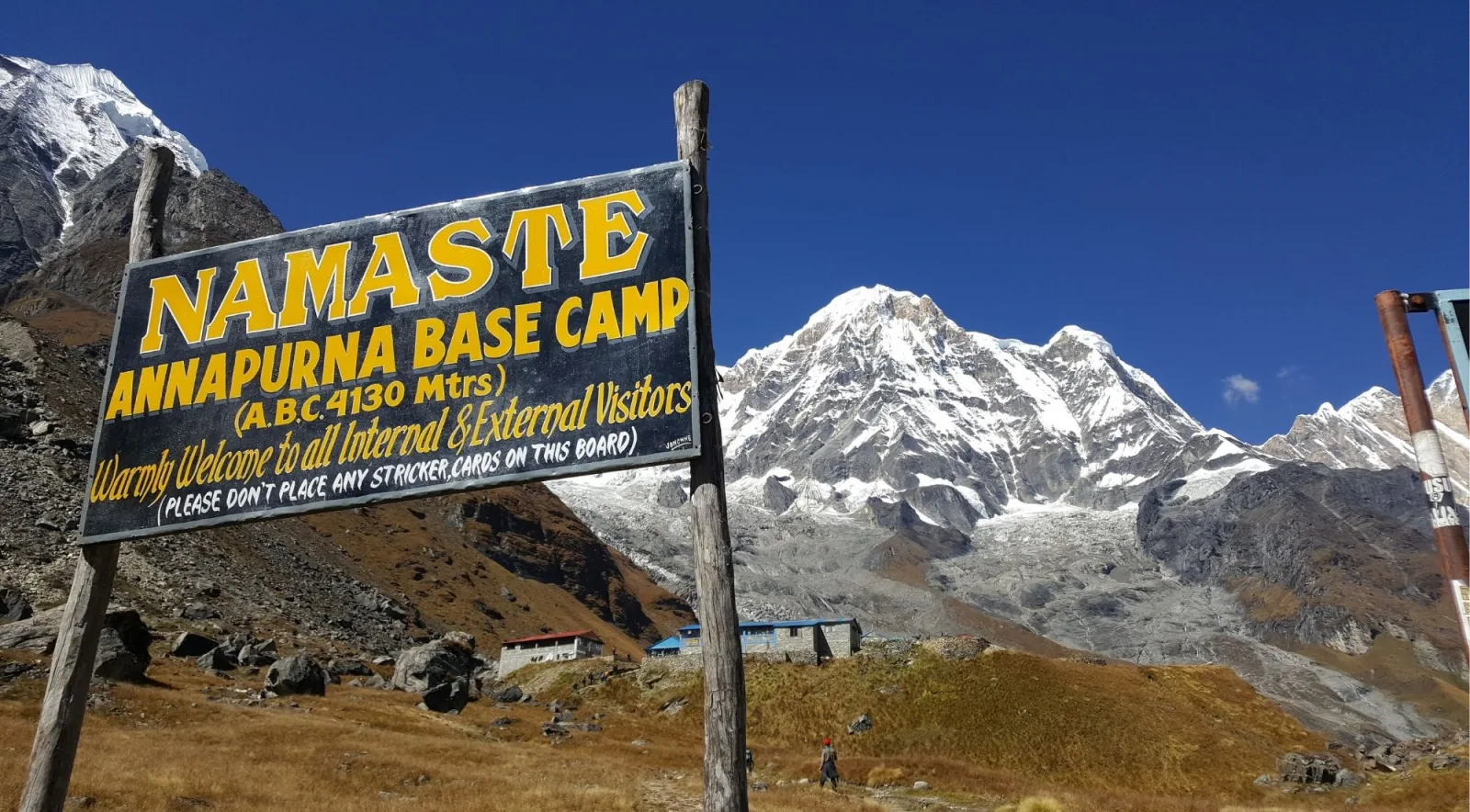
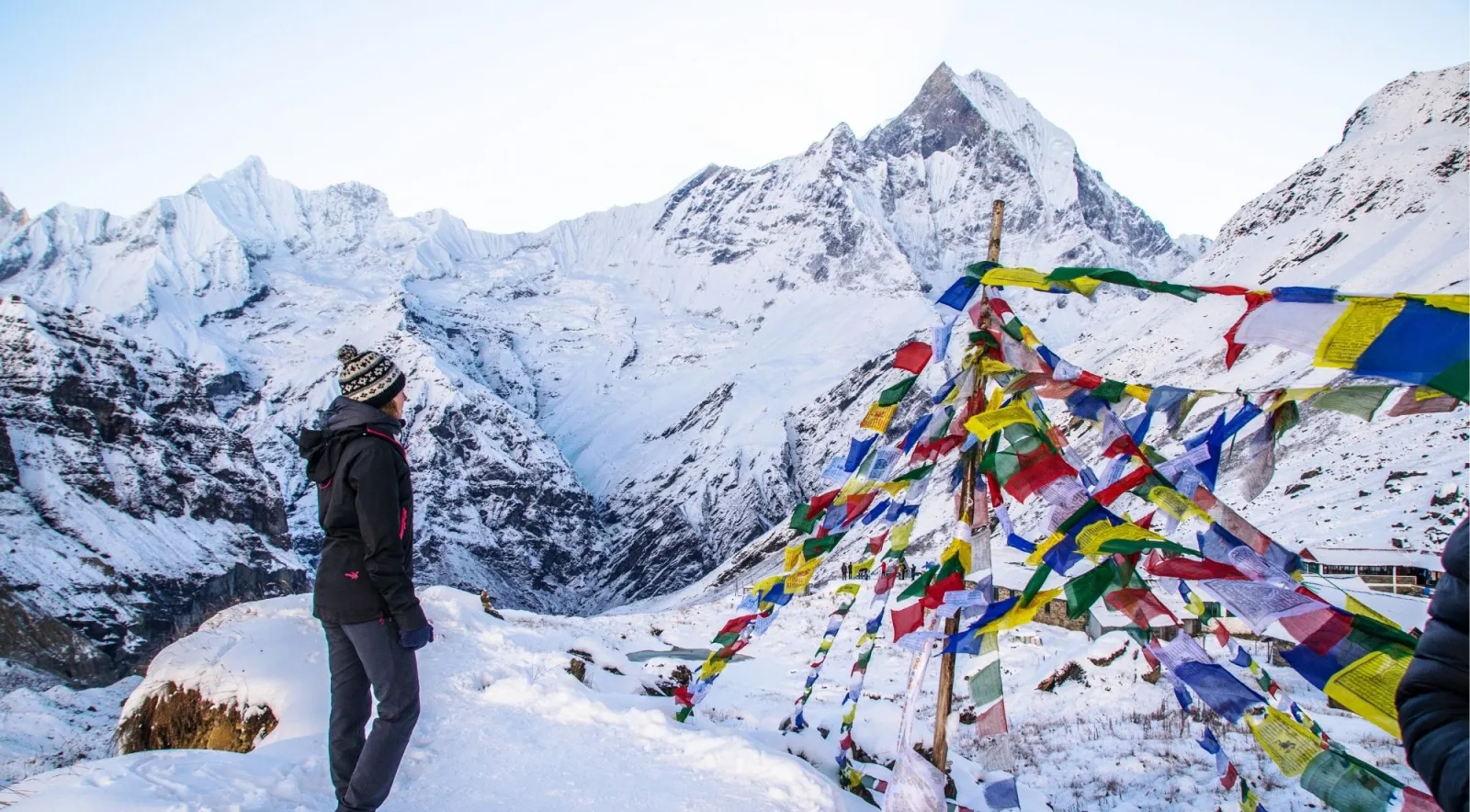
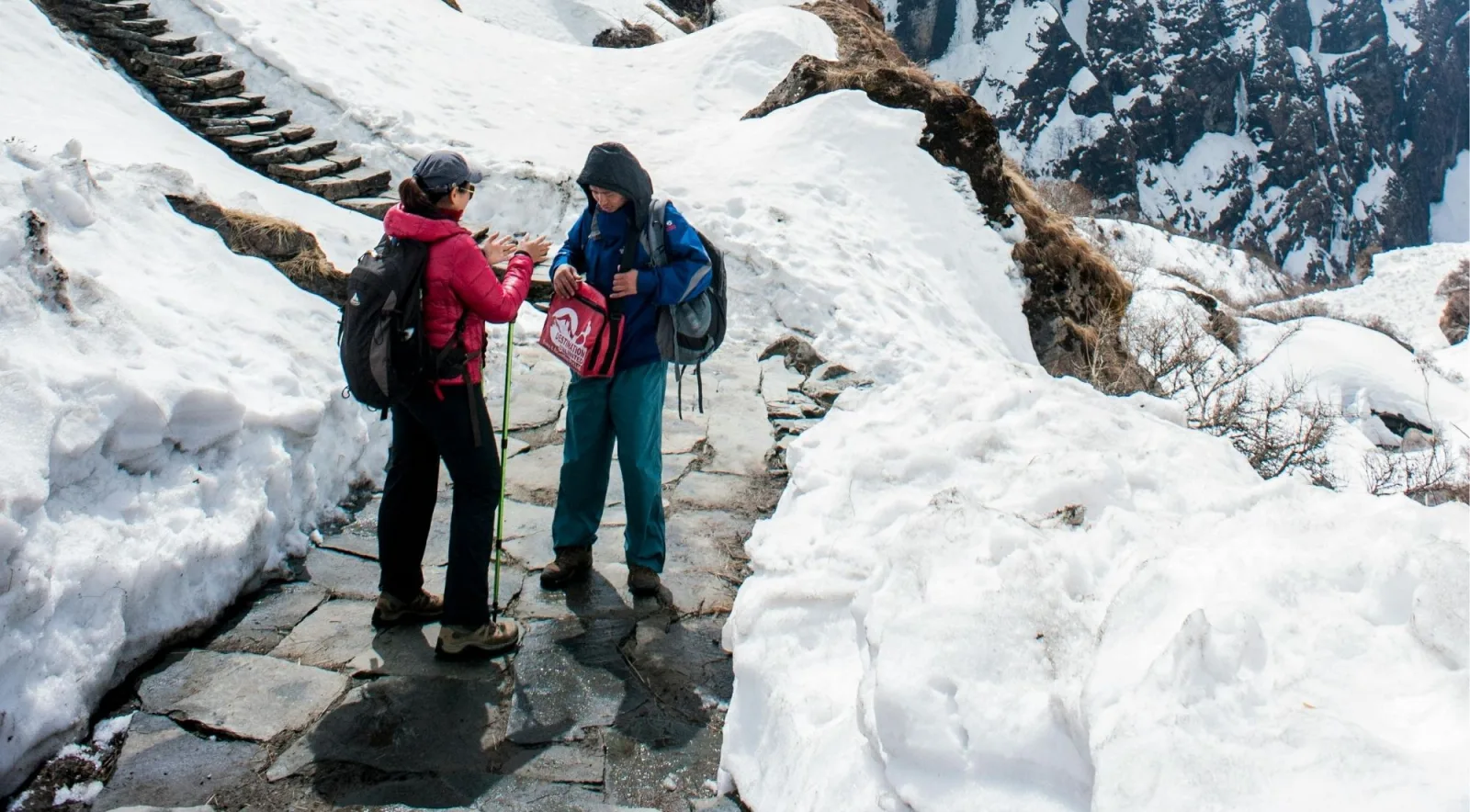
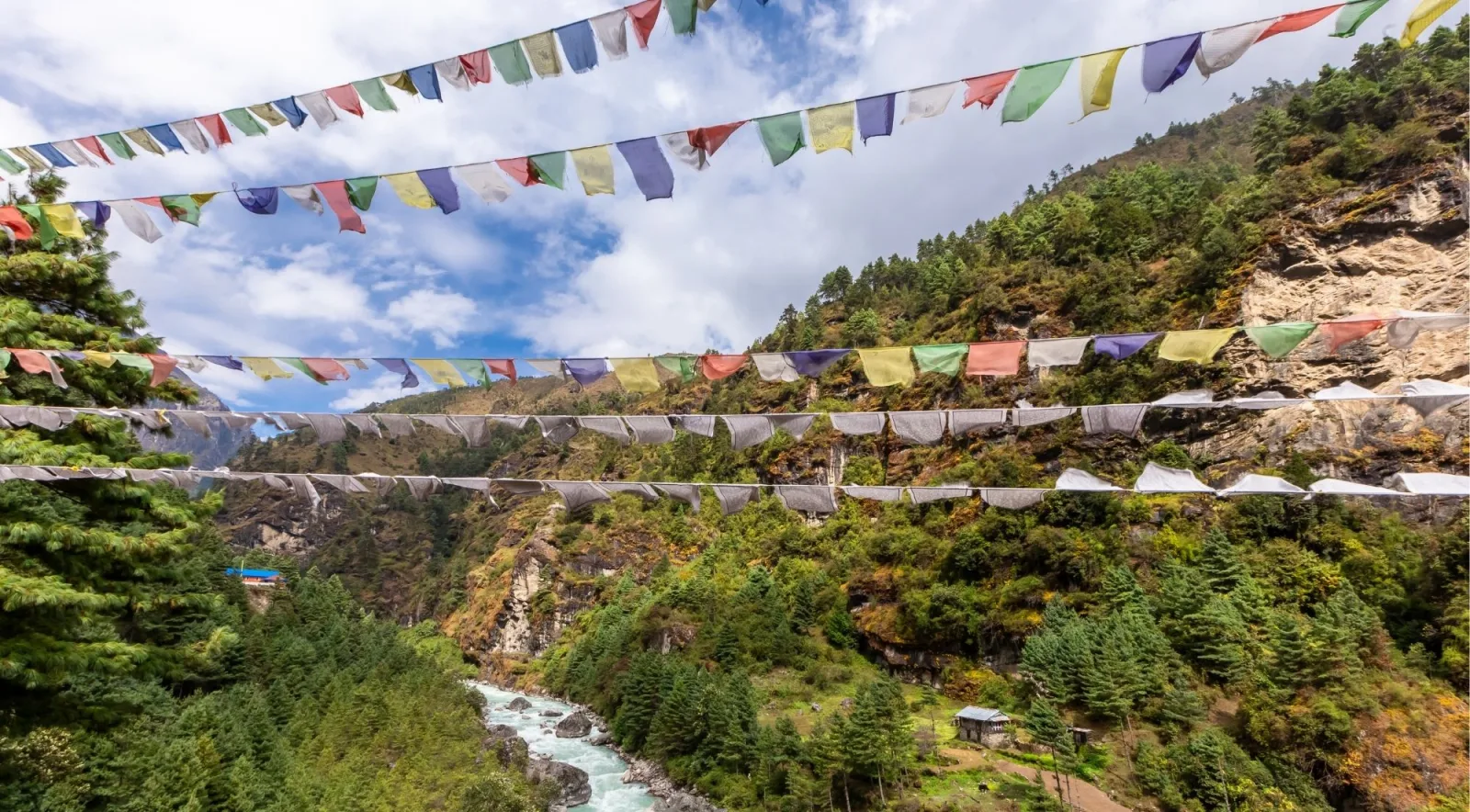
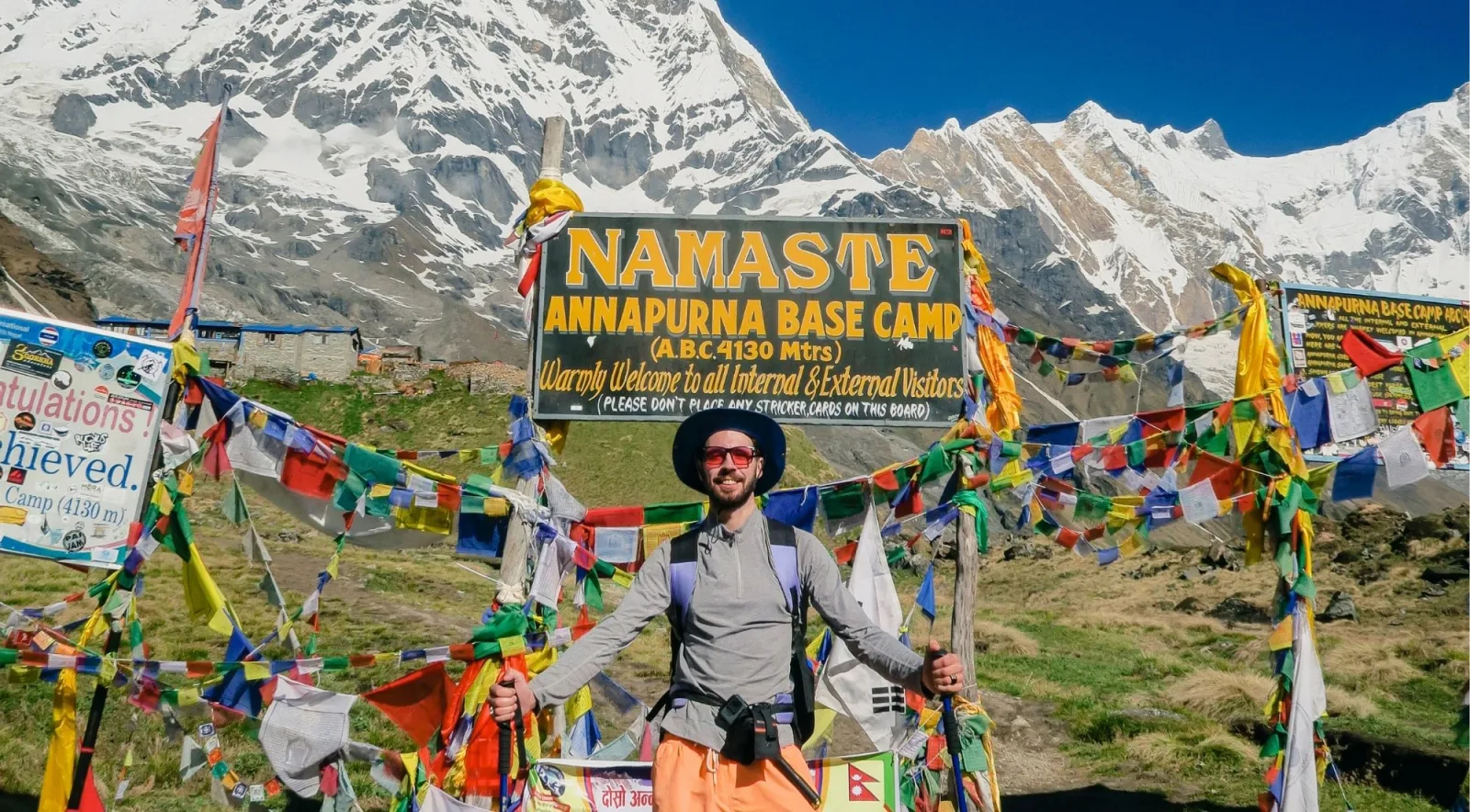
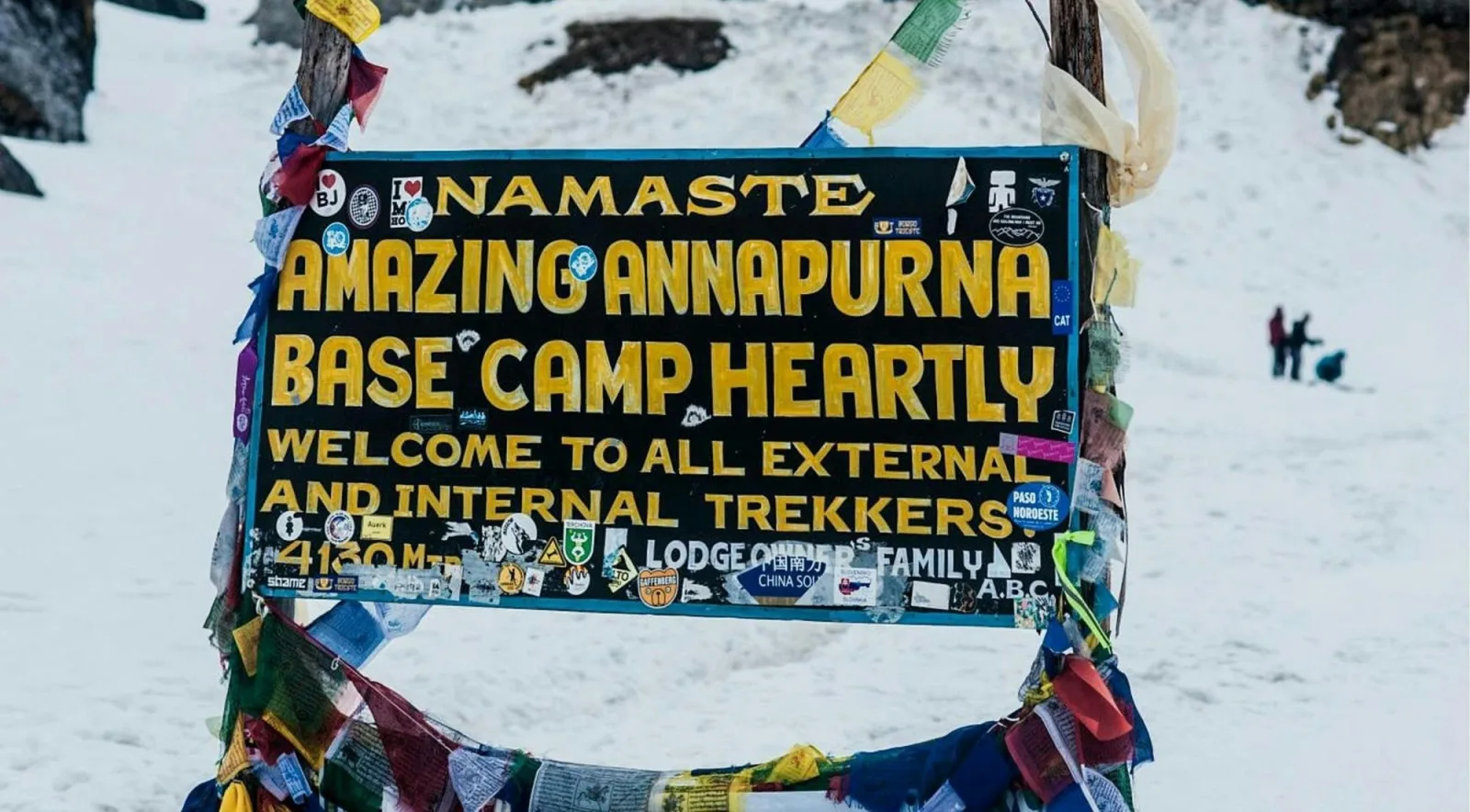
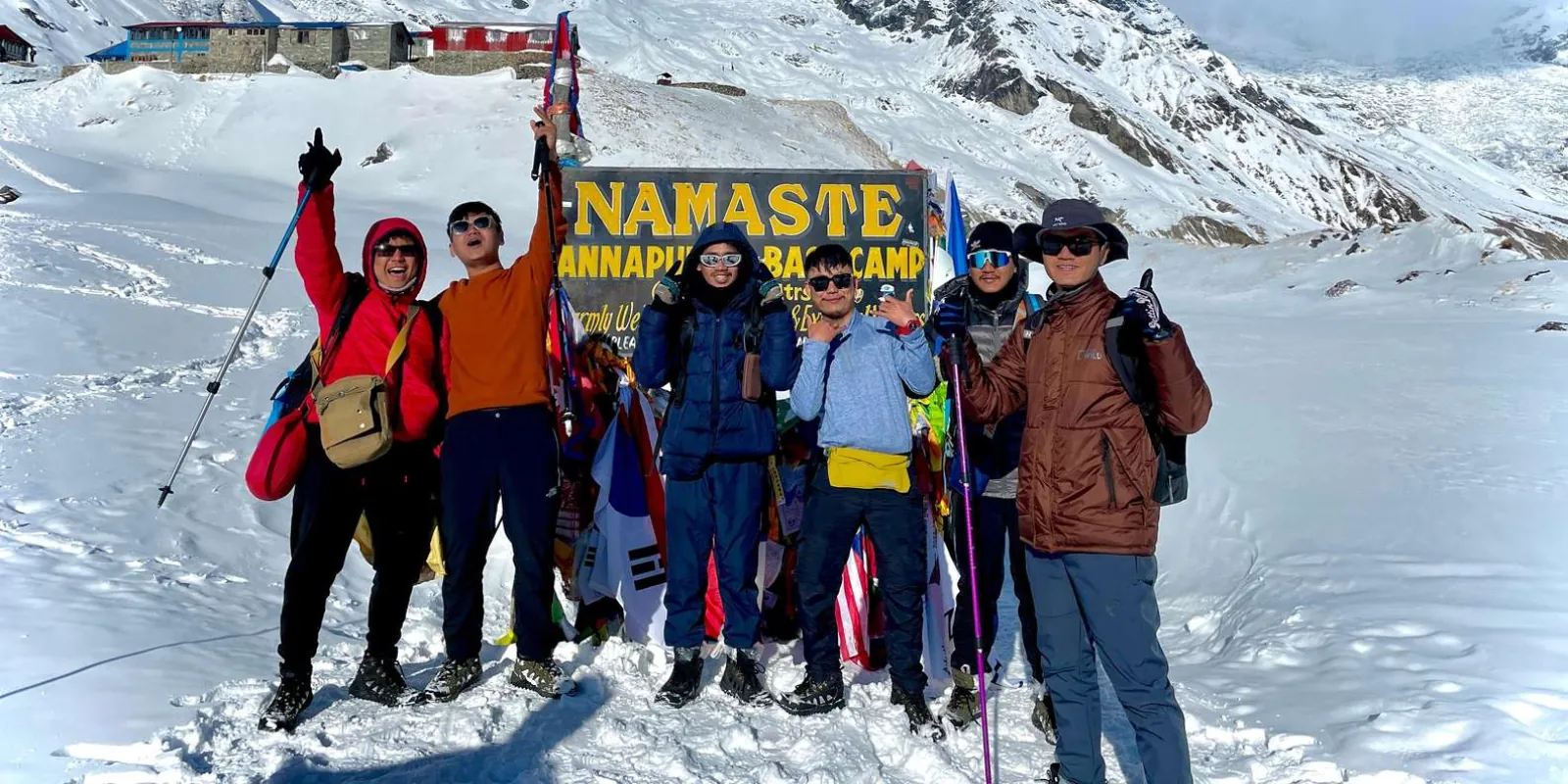
Prayer flags, glacial moraine and the walk in through Gurung country.
Book Your Experience
Check Availability & Prices
Select your preferred date and time. Instant confirmation — free cancellation up to 24 hours before departure.
5-Day vs 7-Day vs 10-Day Annapurna Base Camp Trek
Every route ends at the same 4,130 m base camp. Here is what the extra days actually buy you.
| Feature | MOST BOOKED 5-Day Fast Route | 7-Day Classic Route | 10-Day Poon Hill Route |
|---|---|---|---|
| Reaches Annapurna Base Camp (4,130 m) | Yes — overnight at base camp | Yes — overnight at base camp | Yes — overnight at base camp |
| Walking days | 3 up, 2 down — jeep skips the lower approach | 4 up, 3 down via Ghandruk | 6 up, 4 down via Ghorepani and Poon Hill |
| Altitude gain per day | Fastest — roughly 1,500 m to 4,130 m in three days | Moderate — spread over four ascending days | Gentlest — first four days stay below 3,000 m |
| Poon Hill sunrise panorama | Not included | Not included | Included — 3,210 m viewpoint over Annapurna and Dhaulagiri |
| Gurung village overnight | Passes through, no village night | Night in Ghandruk, the classic slate-roofed village | Nights in Ghorepani and Tadapani |
| Jhinu Danda hot springs | Optional stop on the descent | Optional stop on the descent | Optional stop on the descent |
| Meals | Add-on, or included on the all-inclusive option | Not included — budget $25–35 per day | Not included — budget $25–35 per day |
| Gear loan | Down jacket, sleeping bag and poles included | Duffel bag and poles if needed | Not included — rent in Pokhara |
| Traveller rating | 4.96 / 5 from 161 verified reviews | 4.87 / 5 from 59 verified reviews | 5.0 / 5 from 8 verified reviews |
| Best for | Fit trekkers on a tight schedule who have been at altitude before | First Himalayan trek — the pacing Nepali guides recommend | Anyone worried about altitude, or who wants both headline viewpoints |
| Starting Price | From $91/per person | $205 per person | $262 per person |
| Check Availability | View 7-Day Trek | View 10-Day Trek |
Can't Make These Dates?
Browse More Available Options
Find a tour that fits your schedule — all with instant confirmation and free cancellation.
Compare Routes
Annapurna Base Camp Trek Options
Six guided routes into the Annapurna Sanctuary — five to ten days, budget tea-house treks to a helicopter return. All with free cancellation.
 MOST BOOKED
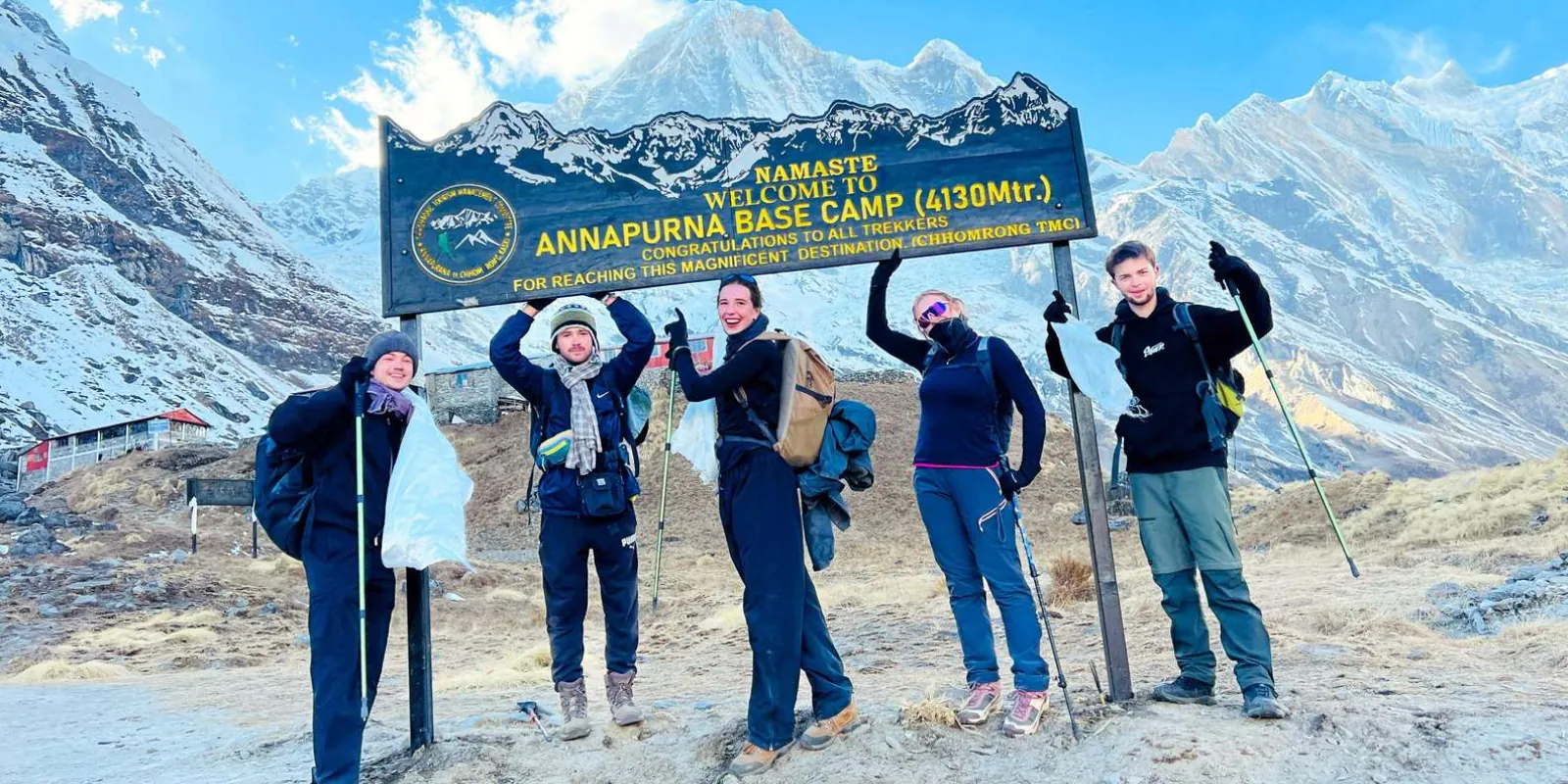
Kathmandu/Pokhara: 5-Day Annapurna Base Camp (ABC) Trek
A fast, well-run five-day route to Annapurna Base Camp (4,130 m) with guest-house nights, a licensed guide, permits, and an optional Kathmandu flight — the most-reviewed ABC trek on GetYourGuide.
 CLASSIC 7-DAY
Pokhara: 7-Day Annapurna Base Camp Trek
The classic seven-day Annapurna Base Camp route through Ghandruk and the Modi Khola gorge, with private transport, permits, standard tourist lodges and a government-certified guide.
HOT SPRINGS ROUTEPokhara: 5-Day Annapurna Base Camp (ABC) Trek via Jhinu
A five-day Sanctuary route that goes in via Jhinu Danda and its riverside hot springs, with tea-house accommodation, permits, private transport and an option for full-board meals.
 POON HILL COMBO
From Pokhara: 10-Day Poon Hill and Annapurna Base Camp Trek
The full Annapurna Sanctuary circuit combined with the Poon Hill sunrise — ten days, private guiding, and the gentlest altitude profile of any route on this page.
 FULL-BOARD OPTION
Pokhara: 9-Day Annapurna Base Camp Trek with Poon Hill
Nine days over the Ghorepani ridge and into the Annapurna Sanctuary, with tea-house nights, permits, transport and a full-package option that includes every meal.
 HELICOPTER RETURN
Annapurna Base Camp Trek with Helicopter Return — 8 Days
Walk up to Annapurna Base Camp over five days, then fly out by helicopter instead of retracing the descent — a fully supported eight-day package with Kathmandu hotels and domestic flights.
Planning Guide
Choosing Your Route to Annapurna Base Camp
What actually differs between a five-day and a ten-day trek to ABC — and how to pick the one that fits you.
Every trek on this page ends in the same place: a flat glacial floor at 4,130 metres, ringed by a near-complete circle of peaks, with Annapurna I (8,091 m) at its head and Machhapuchhre — the Fishtail — standing unclimbed above the entrance. What changes between a $91 five-day package and a $2,689 helicopter itinerary is not the destination. It is how fast you get there, how much of the walking you replace with a vehicle, and how much of the daily cost is folded into the booking price.
The route is a corridor, not a loop
Unlike the Annapurna Circuit, which crosses a 5,416 m pass and takes two weeks or more, the Annapurna Base Camp trek runs up a single valley and back down it. If you have not settled on a route at all yet, our comparison of the best Annapurna treks puts ABC, the Circuit, Poon Hill and Mardi Himal side by side first, and our guide to the best treks from Pokhara sorts them by the number of days you have. The Modi Khola cuts a deep gorge north from the middle hills into the Annapurna Sanctuary, and the trail follows it: terraced farmland and Gurung villages at the bottom, dense oak and rhododendron forest in the middle, then bare moraine and snow at the top. There is one way in and one way out, which is why every operator’s itinerary looks broadly similar and why the differences are all in the pacing.
The gateway village is Chhomrong, at around 2,170 m. Below it the trail is a network of farm paths and jeep roads; above it there is one route, punctuated by the settlements every trekker learns by name — Sinuwa, Bamboo, Dovan, Himalaya, Deurali, Machhapuchhre Base Camp, and finally Annapurna Base Camp itself. Our Annapurna Sanctuary trek guide walks that corridor stop by stop, from the Chhomrong staircase to the moraine at the top.
What the day count actually buys you
A five-day trek works because a jeep now runs up the rough road to Siwai or Simrung, cutting out roughly two days of the old approach from Nayapul. You still sleep at base camp. The trade-off is altitude gain: you go from about 1,500 m to 4,130 m in three walking days, which is fast. It suits people who are already fit and have trekked at altitude before.
A seven-day trek is what most Nepali guides suggest for a first Himalayan trip. It adds a night in Ghandruk — the large slate-roofed Gurung village with a direct view of Annapurna South — and spreads the climb over gentler stages. It also leaves a spare margin: if you wake to cloud at base camp, you have not blown the entire trip.
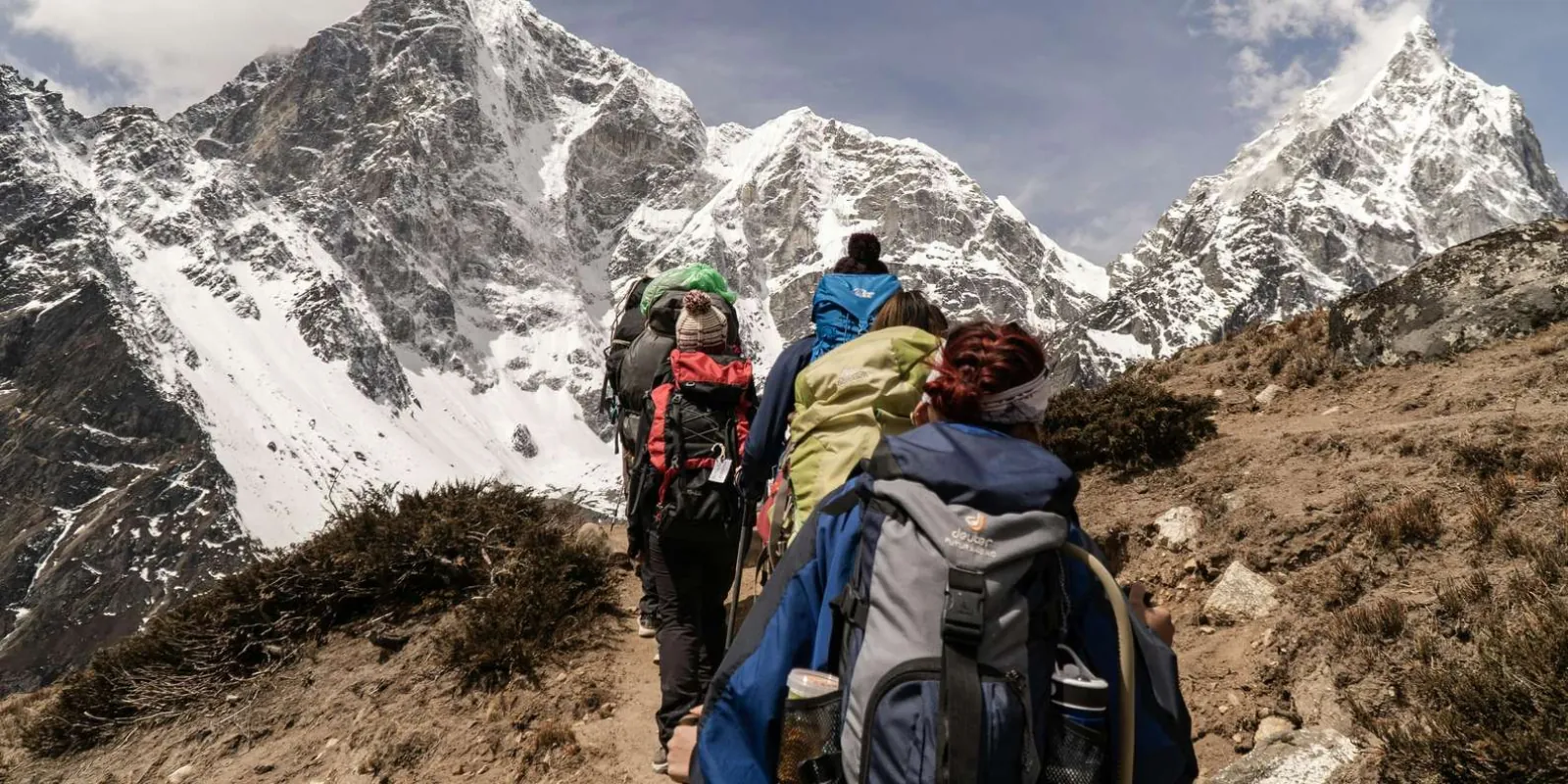
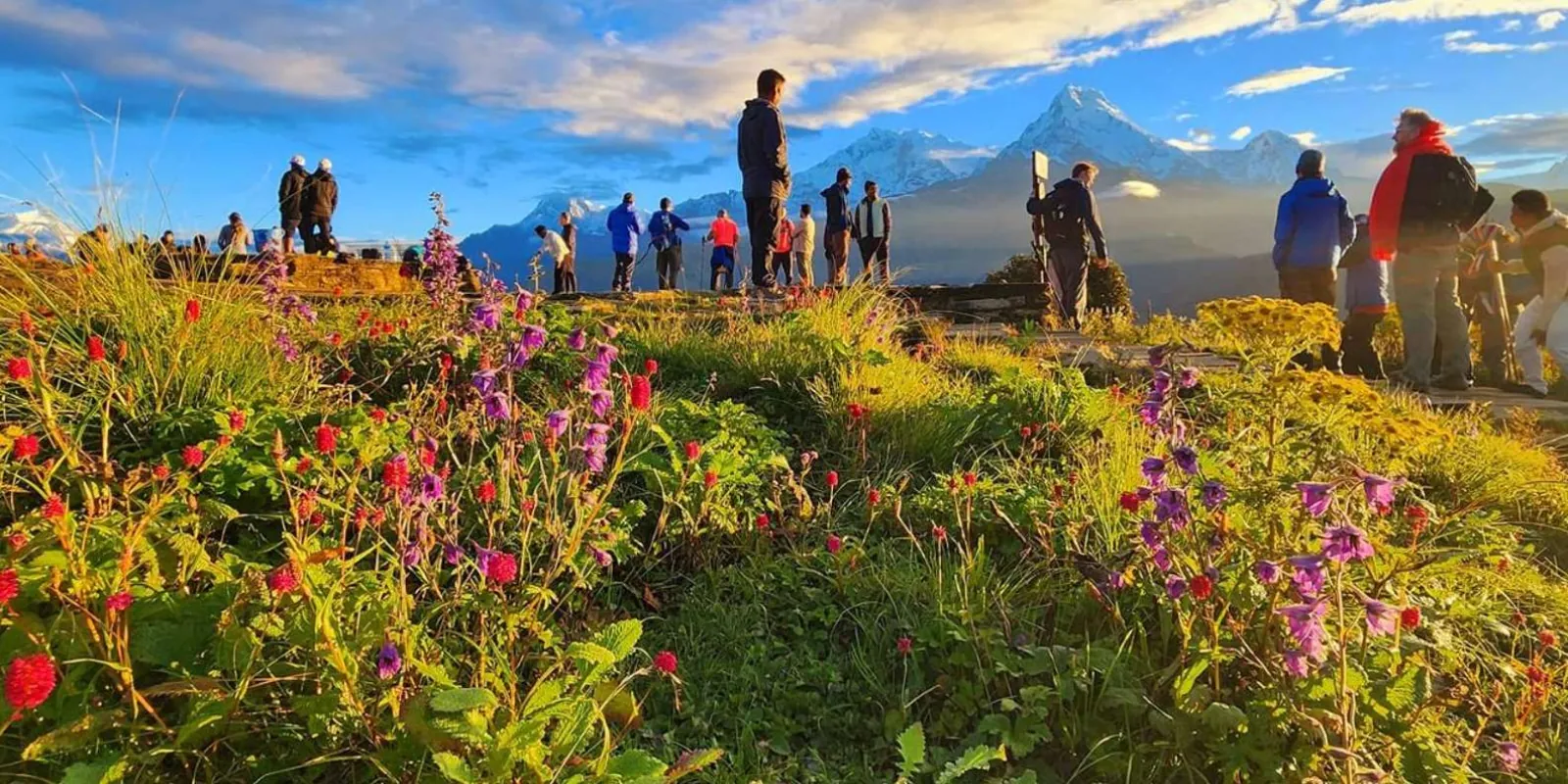
A nine- or ten-day trek adds the Ghorepani–Poon Hill leg before turning into the Sanctuary. Poon Hill (3,210 m) gives you the wide horizon-to-horizon panorama of Annapurna and Dhaulagiri that you cannot see from inside the Sanctuary, where the peaks are so close they fill the sky rather than line it up. It also builds four days of acclimatisation below 3,000 m before you go high, which is why one traveller on the ten-day route reported their guide simply extending the itinerary when altitude symptoms appeared, rather than pushing on.
The helicopter-return package replaces the three-day descent with a twenty-minute flight. It is the only genuinely different product on this page — and worth knowing that Sanctuary helicopter flights are weather-dependent and regularly delayed, so you should keep a buffer day before any onward international flight.
The staircases, not the altitude, are what people remember
Annapurna Base Camp is high, but it is not extreme. At 4,130 m most trekkers feel the thinner air as breathlessness and a mild headache rather than anything worse, and the standard advice applies: climb slowly, drink more than you think you need, and tell your guide early if you feel unwell. Our altitude guide lists the elevation of every stop from Pokhara to base camp.
What catches people out is the stone staircases. The climb out of Chhomrong and the ascent to Sinuwa are long flights of hand-laid stone steps, and on the Ghorepani routes the Ulleri staircase runs to several thousand steps in a single morning. There is no scrambling, no rope and no technical ground anywhere on the trail — but there are five to six hours of walking a day for consecutive days, much of it stepping up or stepping down. Our trek difficulty guide breaks down each stage and the training that actually transfers.
Permits, guides and what the rules are now
One permit covers the whole region: the Annapurna Conservation Area Project (ACAP) permit, which in 2026 costs NPR 3,000 for foreign nationals — roughly US$22–25 — and NPR 1,000 for SAARC nationals. It covers Annapurna Base Camp, Poon Hill, Mardi Himal and the Circuit alike. The separate TIMS card, still cited by a lot of older blog posts, is reported to no longer be checked at Annapurna checkpoints, though agencies often still issue one.
The bigger change is the guide rule. Since 1 April 2023 the Nepal Tourism Board has required foreign trekkers to be accompanied by a licensed guide, ending unaccompanied independent trekking in the conservation areas; guides must be registered with the Trekking Agencies Association of Nepal. Every operator on this page is organising exactly that, and the permit paperwork is handled for you before you arrive. It is not something you need to solve yourself — but it is why “can I do this alone?” now has a different answer than it did a few years ago.
When to go
October and April are the two months everything else is measured against. October gives the clearest post-monsoon air and the most reliable mountain views, at the cost of being the busiest month on the trail; April brings the rhododendron forests into bloom and warmer nights. November is the driest month of the autumn, and late November is the shoulder-season sweet spot — thinner crowds, still-strong views, but base-camp nights reported down around −10 °C, so your sleeping bag rating matters. Monsoon treks (June to August) do happen and can still deliver clear mornings, but expect erratic weather, cloud, and leeches on the lower forest sections. The month-by-month guide has the full picture, and if you are still weighing this against the Khumbu, the ABC vs Everest Base Camp comparison puts the two side by side.
What is actually included
This is where the listed prices stop being comparable. The $91 five-day package includes the guide, permits, lodging, jeep transfer and even the loan of a down jacket and sleeping bag — but meals are an add-on. The seven-day route includes private transport and lodges but no food at all, which realistically adds $25–35 a day. The nine-day route excludes sleeping bags and poles, which are cheap to rent in Pokhara but easy to forget. The comparison table above sets those inclusions side by side, every tour page lists them line by line, and the cost and permits guide works a realistic all-in budget for a seven-day trek — so you can price each route properly before you book rather than after.
Guest Reviews
What Trekkers Say
5.0/5
from 161 verified GetYourGuide travellers
"We had an absolutely wonderful experience on the five-day, four-night Annapurna Base Camp trek — it exceeded all our expectations. Our group of five was expertly looked after the whole way."
"Very exciting even though it was monsoon — we still got great views across the five days, even if some were cloudy. Our guide Rupesh was amazing and taught us a lot about local culture."
"Raju was an excellent guide and I would highly recommend him for the Annapurna Base Camp trek. As someone with experience on similar hikes, the biggest value was having a guide who knew the route."
Read all 161 verified reviews
See All ReviewsStand at 4,130 m Beneath Annapurna I
The most-booked Annapurna Base Camp trek on GetYourGuide is rated 4.96/5 by 161 travellers. Licensed guide, ACAP permits, guest houses and jeep transfer included. Free cancellation. Starting from $91 per person.
Check Availability & BookAnnapurna Base Camp Trek FAQ
Everything you need to know before booking your trek to ABC.
Guided packages on this site start from $91 per person for a 5-day trek and run to $2,689 for an 8-day itinerary with a helicopter return. The mid-range 7- to 10-day routes sit between $205 and $464. Those figures cover the guide, permits and lodging; most exclude meals, which add roughly $25–35 a day on the trail. Our cost and permits guide breaks down the full on-the-ground budget.
Five days is the practical minimum, made possible by a jeep transfer that skips the lower approach — you still sleep at base camp. Seven days is the pacing most Nepali guides recommend for a first Himalayan trek. Nine or ten days adds the Ghorepani–Poon Hill leg and gives you the gentlest acclimatisation profile. All of them reach the same base camp at 4,130 metres. If you are still choosing between ABC and the region's other routes, our best Annapurna treks comparison sets the four side by side by duration and altitude, and our guide to the best treks from Pokhara matches each route to the number of days you have.
Annapurna Base Camp sits at 4,130 metres (13,550 feet), on the glacial floor of the Annapurna Sanctuary. Annapurna I, the world's tenth-highest mountain at 8,091 metres, stands directly above it, with Machhapuchhre (6,993 m), Annapurna South and Hiunchuli closing the ring. Our altitude guide lists the elevation of every stop from Pokhara to base camp.
It is a stamina trek, not a technical one — there is no climbing, no rope and no exposure anywhere on the route. What makes it demanding is five to six hours of walking on consecutive days and the long hand-laid stone staircases around Chhomrong, Sinuwa and, on the Poon Hill routes, Ulleri. Fit walkers with no altitude experience complete it regularly. See our difficulty guide for a stage-by-stage breakdown.
At 4,130 metres mild symptoms — headache, breathlessness, poor sleep — are common and usually pass. Serious altitude sickness is uncommon on this route but possible, and the risk is higher on the compressed five-day itineraries that gain height fastest. Tell your guide the moment you feel unwell: licensed guides are trained to slow the pace, rest a day, or descend with you.
One permit covers the whole region: the Annapurna Conservation Area Project (ACAP) permit, which in 2026 costs NPR 3,000 for foreign nationals (about US$22–25) and NPR 1,000 for SAARC nationals. It covers ABC, Poon Hill, Mardi Himal and the Annapurna Circuit alike. Every operator on this site arranges the permit for you before the trek starts.
Yes. Since 1 April 2023 the Nepal Tourism Board has required foreign trekkers to be accompanied by a licensed guide registered with the Trekking Agencies Association of Nepal, and checkpoints in the conservation area verify guide credentials. Unaccompanied independent trekking is no longer permitted, so booking a guided package is now the standard route in rather than an upgrade.
October and April are the two strongest months — October for the clearest post-monsoon views, April for blooming rhododendrons and warmer nights. November is the driest month of the autumn and late November brings thinner crowds with strong views, though base-camp nights are reported down around −10 °C. Read the full month-by-month breakdown in our best time to trek guide.
They answer different questions. ABC is lower, shorter, cheaper, reachable without a mountain flight, and puts you inside an amphitheatre of peaks; EBC is higher, longer, more expensive and delivers the name. For a first Himalayan trek with limited time, ABC is usually the easier yes. Our side-by-side comparison covers cost, altitude, difficulty and scenery in detail.
In tea houses and mountain guest houses along the trail — simple twin rooms with shared bathrooms, a communal dining room with a stove, and paid extras for hot showers, Wi-Fi and charging. Above Deurali the rooms are unheated and nights drop below freezing in every season, so your sleeping bag rating matters more than the lodge does.
Not if you hire a porter. Most operators here offer one at roughly $15–20 a day, typically shared between two trekkers, carrying up to about 25 kg. It is the single upgrade trekkers most often say they were glad they paid for, mainly because of the Chhomrong staircases.
Yes. Every trek listed on this site offers free cancellation, and most operators also support reserve-now-pay-later, so you can hold a departure date before committing. Cancellation windows are shown on each booking page before you confirm.
Still have questions? Email us at info@annapurna-base-camp-treks.com